
.jpg)
Stadium LED Display Solution

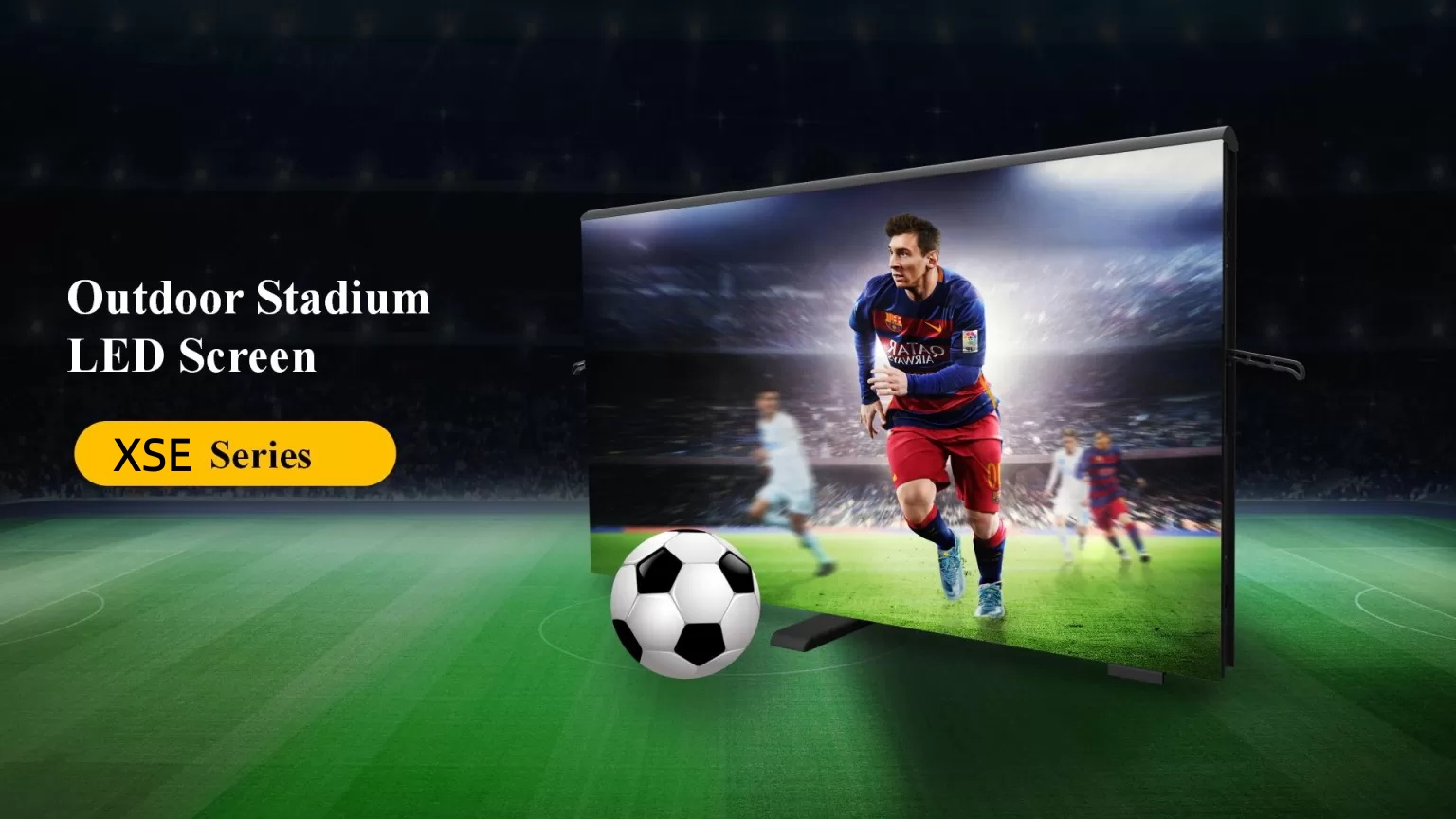
Click on the image above to Stadium LED Display Solution
Stadium LED Display Solution: Complete Guide for Sports Venues
Modern sports venues need more than traditional advertising boards. A professional stadium LED display solution can turn the perimeter of a football field, basketball court, athletics track, or multi-purpose arena into a dynamic communication and advertising platform.
From live scores and match information to sponsor advertising and instant replays, LED displays help stadium operators improve the fan experience while creating additional commercial value.

Table of Contents
- What Is a Stadium LED Display Solution?
- Main Applications of Stadium LED Screens
- Stadium Perimeter LED Display
- Main Stadium LED Scoreboard
- LED Ribbon Displays
- Key Requirements for Sports Stadium LED Displays
- How to Choose the Right Pixel Pitch
- Safety Design for Players
- Outdoor Weather Protection
- LED Display for TV Broadcasting
- Stadium Advertising and Sponsorship
- Complete Stadium LED Display Solution
- FAQ
1. What Is a Stadium LED Display Solution?
A stadium LED display solution is a complete digital display system designed specifically for sports venues.
It can include:
- LED perimeter advertising boards
- Large LED scoreboards
- Center-hung LED displays
- LED ribbon screens
- Stadium entrance LED screens
- Concourse advertising screens
- VIP room and media room LED displays
- Control systems and content management software
A modern stadium normally requires several different types of LED displays because viewing distances, camera positions, brightness requirements, and content requirements vary throughout the venue.

2. Main Applications of Stadium LED Screens
Football Stadium
LED screens can be installed around the football pitch for:
- Sponsor advertising
- Live match information
- Team logos
- Player information
- Match statistics
- Promotional videos
- Fan messages
Basketball Arena
Indoor basketball venues can use LED perimeter screens around the court, large scoreboards, and ribbon displays around the seating area.
Athletics Stadium
LED displays can be installed around the running track to show:
- Event information
- Athlete information
- Results
- Sponsor advertisements
- Live statistics
Multi-Purpose Sports Venue
For venues hosting football, basketball, concerts, exhibitions, and other events, modular LED systems can provide greater flexibility.
3. Stadium Perimeter LED Display
The stadium perimeter LED display is one of the most important LED systems for professional sports venues.
It is installed around the edge of the football pitch, basketball court, or athletics track.
6
The screen can continuously display different sponsors during a match. Unlike traditional static advertising boards, digital LED technology allows stadium operators to change advertising content without physically replacing the boards.
Typical Content
- Sponsor logos
- Advertising videos
- Team graphics
- Match information
- Social media content
- Promotional messages
- Event announcements
For outdoor football stadiums, P8–P10 is commonly considered a practical range, while higher-resolution options can be selected when viewing distances and content requirements justify them.

4. Main Stadium LED Scoreboard
A large LED scoreboard provides a central visual focus for spectators.
It can display:
- Score
- Game clock
- Team names
- Player information
- Live video
- Instant replays
- Match statistics
- Sponsor advertising
For large stadiums, the scoreboard should be selected according to the seating distance, screen size, viewing angle, brightness, and broadcast requirements rather than simply choosing the highest resolution available.
5. LED Ribbon Displays
LED ribbon displays are installed around the upper or lower sections of stadium seating.
They can create a continuous visual effect throughout the venue.
Typical applications include:
Advertising → Team branding → Match statistics → Fan messages → Event graphics
Ribbon displays are especially useful when the venue wants to maintain visual communication with spectators sitting far from the main scoreboard.
6. Key Requirements for Sports Stadium LED Displays
A stadium LED screen has different requirements from a normal commercial LED display.
High Brightness
Outdoor stadium screens need sufficient brightness to remain visible under strong daylight.
Some professional outdoor perimeter systems specify approximately 5,500–8,000+ nits, depending on the application and design.
High Refresh Rate
A high refresh rate is particularly important when the stadium is being filmed by professional cameras.
It helps reduce visible flicker and image artifacts during live broadcasting and slow-motion playback. Professional sports solutions commonly specify 3,840 Hz or higher, depending on the system.
Wide Viewing Angle
Spectators may view the screen from many different positions, so a wide viewing angle is important for perimeter advertising boards and ribbon displays.
Weather Resistance
Outdoor stadium LED displays need protection against:
- Rain
- Dust
- Humidity
- UV exposure
- Temperature changes
IP65-rated outdoor solutions are commonly used for stadium applications.
7. How to Choose the Right Pixel Pitch
Pixel pitch should be selected according to viewing distance, screen size, application, and camera requirements.
| Application | Typical Pixel Pitch |
|---|---|
| Outdoor football perimeter | P8 / P10 |
| Outdoor athletics stadium | P8 / P10 |
| Large outdoor scoreboard | P6–P10 |
| Indoor basketball arena | P4–P6 |
| Indoor sports venue | P2.5–P5 |
| VIP / indoor viewing areas | P1.8–P3.9 |
These are general planning ranges rather than fixed rules. A professional project should calculate pixel pitch based on the actual stadium geometry and viewing distance.

8. Safety Design for Players
Safety is one of the most important considerations when installing LED displays beside a sports field.
Perimeter LED displays should incorporate features such as:
Soft LED Mask
A soft or impact-absorbing surface helps reduce the risk of injury if a player comes into contact with the display.
Rounded Edges
Rounded cabinet structures can reduce sharp edges around the playing area.
Adjustable Angle
Adjustable mounting brackets can optimize the viewing angle while helping keep the display positioned appropriately around the field.
Stable Installation
The supporting structure must be designed to prevent movement or tipping during normal stadium operation.
Sports-specific LED products commonly combine soft-mask protection, adjustable brackets, and reinforced cabinet structures for this reason.
9. Outdoor Weather Protection
Football and athletics stadiums may operate in rain, wind, dust, and direct sunlight.
Therefore, an outdoor stadium LED display should normally include:
- Weather-resistant cabinet design
- High IP protection
- Anti-UV components
- High-brightness LEDs
- Reliable power supplies
- Efficient heat dissipation
- Appropriate drainage and ventilation design
For outdoor projects, IP65 is a commonly specified protection level for professional LED display systems.

10. LED Display for TV Broadcasting
Broadcast compatibility is critical for professional stadiums.
A stadium LED display may appear in television and streaming footage throughout an entire match. Therefore, the system should be designed around the venue's camera positions and production requirements.
Important factors include:
- High refresh rate
- Appropriate brightness
- Stable grayscale performance
- Flicker reduction
- Suitable LED driver IC
- Correct camera-facing angle
- Consistent brightness across the entire screen
For televised sports, the LED system should be tested with the actual broadcast cameras whenever possible.
11. Stadium Advertising and Sponsorship
One of the biggest advantages of stadium LED displays is the ability to create digital advertising inventory.
For example, a 90-minute football match could display multiple sponsors in rotation:
Sponsor A → Sponsor B → Sponsor C → Sponsor D → Sponsor A
The operator can also divide the display into different content zones or schedule different advertising campaigns for different periods of an event. Modern perimeter LED systems support multi-zone content management and real-time content switching.
This makes the stadium LED system not only a display product, but also a potential revenue-generating asset.

.jpg "20260912001_副本(1).jpg")
12. Complete Stadium LED Display Solution
A professional stadium project should not focus only on the LED cabinet.
A complete solution can include:
Hardware
- LED display cabinets
- LED modules
- Receiving cards
- Sending cards
- Video processors
- Power supplies
- Control computers
- Structural supports
- Protective accessories
Software
- Content management
- Advertising scheduling
- Remote screen control
- Multi-screen management
- Live video playback
- Emergency messaging
Engineering
- Stadium site survey
- Screen layout design
- Structural design
- Power distribution
- Signal distribution
- Installation
- Testing
- Staff training
- After-sales service
For large venues, the LED architecture should be designed according to the physical zones, sightlines, camera geometry, viewing distance, and maintenance requirements.
13. Why Choose an LED Stadium Solution?
A well-designed stadium LED display can provide several advantages:
Better Fan Experience
Fans can see live information, replays, statistics, and event graphics more clearly.
More Advertising Opportunities
Digital displays allow multiple sponsors to share the same advertising space.
Better Broadcast Visibility
High-refresh-rate LED technology can provide cleaner images for television and streaming.
Flexible Content
Advertising and event content can be changed digitally without replacing physical banners.
Professional Stadium Appearance
Large-format LED displays create a modern and professional visual environment.
Frequently Asked Questions
1. What is the best pixel pitch for a football stadium LED perimeter display?
For outdoor football stadiums, P8 and P10 are common choices. The final pixel pitch should be determined by viewing distance, screen dimensions, camera positions, and budget.
2. How bright should a stadium LED display be?
Outdoor stadium applications generally require high brightness. Depending on the installation, professional systems may use approximately 5,500–8,000+ nits.
3. Are stadium LED displays waterproof?
Outdoor stadium LED displays should have appropriate IP protection. IP65 is commonly used for outdoor sports applications, although the exact protection level should be selected according to the installation environment.
4. Are perimeter LED displays safe for football players?
Sports-specific perimeter displays can use soft masks, impact-absorbing structures, rounded edges, protective padding, and adjustable supports to improve player safety.
5. Can stadium LED screens display advertisements?
Yes. Advertising is one of the primary applications. Multiple sponsors can be scheduled and displayed during different periods of a match or event.
6. Can the LED display show live scores?
Yes. Stadium LED systems can integrate with scoring and event-management systems to display scores, game time, player information, statistics, and other real-time information.
7. Can the stadium LED screen be used for TV broadcasting?
Yes. A suitable refresh rate, brightness, LED driver, processing system, and camera-facing installation should be selected to provide broadcast-friendly performance.
8. Can LED perimeter displays be used for basketball?
Yes. LED perimeter systems can be installed around basketball courts and are widely suitable for indoor sports arenas.
9. Can the LED screen display different advertisements at the same time?
Yes. Depending on the control system, the screen can be divided into multiple content zones or different advertising sequences can be scheduled.
10. How do I choose the right stadium LED display?
Consider these factors first:
Venue type → Indoor/outdoor → Viewing distance → Screen size → Pixel pitch → Brightness → Refresh rate → Safety → Weather protection → Maintenance → Budget
Conclusion
A professional Stadium LED Display Solution should combine visual performance, player safety, weather resistance, broadcast compatibility, advertising flexibility, and reliable operation.
For football stadiums, the perimeter LED display is particularly valuable because it can simultaneously serve spectators, sponsors, broadcasters, and venue operators.
For a new stadium project, the best approach is to design the LED system around the venue's actual field dimensions, seating layout, viewing distances, camera positions, advertising requirements, and maintenance conditions rather than selecting a screen based only on a product specification sheet.
Contact the StarOE team to provide detailed information: country location, scene, size, installation method (wall mounted installation, stage mobile and floor mounted installation), and obtain a quotation
aluminum box:1600*900mm
Die-cast aluminum box:960*960mm
aluminum box:1600*900mm
Tel: +86 13691801582
E-mail: staroeled@163.com
Whatsapp: +86 13691801582Add: 2nd floor,Building C,Wanda Industrial Area,Shiyan Town,
Baoan District, Shenzhen, China


.png "1(1).png")

Copyright 2014-2024 Shenzhen StarOE Technology Co., Ltd. All Rights Reserved.